CP SignalTechnology worth your attention.

Thursday, 15 October 2026

The Daily Edition: 6 stories, ranked by significance

  1. Security & privacy

    Next.js Security Update for Upstream Vulnerabilities

    Next.js released v16.4.1 and v15.5.28 to fix two critical unauthenticated remote code execution vulnerabilities and one high-severity denial of service bug. One RCE affects App Router apps using Cache Components with 'use cache' functions returning typed arrays and has no workaround; the other affects SVG image optimization on glibc-based Linux via an upstream sharp library flaw. The DoS bug affects App Router apps using Server Actions, where crafted requests can exhaust CPU and block further requests.

    Read the storyNo. 1 of 6Next.js BlogWed 14 Oct
  2. Software development

    Package managers have an integrity problem

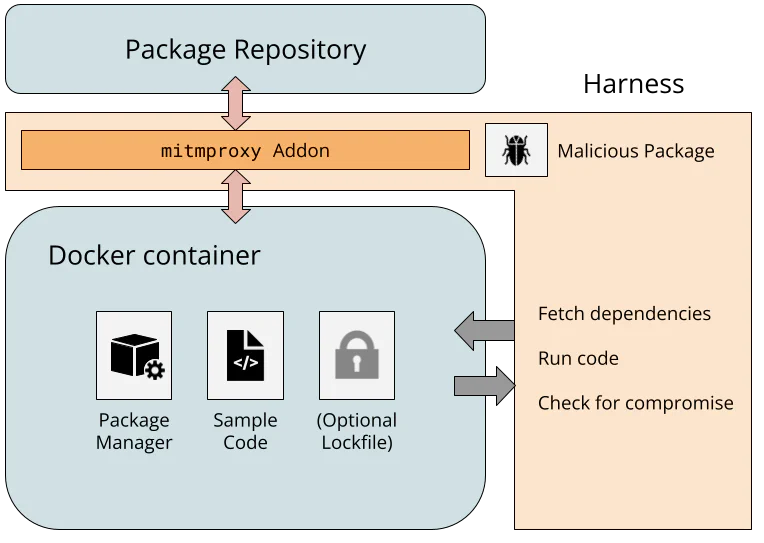
    Trail of Bits built a Docker/mitmproxy test harness to simulate a compromised package repository and tested 25 major package managers' cryptographic defenses. It found that fewer than half checked lockfile hashes by default, only Go and vcpkg verified every package's integrity, only Go verified signatures by default, and cpanminus still uses unencrypted HTTP, a known issue left unfixed to avoid a breaking change.

    No. 2 of 6Trail of Bits ResearchWed 14 Oct
  3. Artificial intelligence

    How Safe Is ChatGPT Health Advice? Evidence from Real User Conversations in Four Global South Countries

    Researchers analyzed 202,590 real ChatGPT conversations donated by 1,252 users in India, Nigeria, Brazil, and Pakistan, isolating 15,555 health-related exchanges. About one in five were rated high-risk for unsafe medication guidance, harmful self-diagnosis, missing warnings, or failure to refer to a professional, and risk rose further when the model's own accumulated context about the user was factored in.

    No. 3 of 6arXiv cs.CRTue 13 Oct
  4. Security & privacy

    CWE-bench: Refocusing Agentic Security from Exploitation to Defense

    Researchers introduce CWE-bench, a 120-task private benchmark testing whether AI agents can audit and repair vulnerabilities across 73 CWE types, eight languages and the OWASP Top 10 2025, without being told what or where the flaw is. The best agents achieve 68% pass@1 and 81% pass@4, and the study finds no single agent dominates across languages or vulnerability categories, with difficulty driven more by vulnerability type than language.

    No. 4 of 6arXiv cs.CRMon 12 Oct
  5. Software development

    Researchers improve weather forecasts looking two to six weeks out

    A team including MIT researchers built a machine-learning postprocessing layer that corrects errors in existing weather forecasting models, and when applied to ECMWF's model it doubled predictive accuracy in the 2-to-6-week "subseasonal" range and won a major ECMWF forecasting competition. Published in Nature, the technique is the first to beat long-term climatological averages in this notoriously unpredictable window and also improved extreme-weather prediction, with Kenya's meteorological office already reaching out to use it for monsoon forecasting.

    No. 5 of 6MIT News — AIWed 14 Oct
  6. Security & privacy

    ProtoArena: Can AI Agents Discover and Exploit Real-World Cross-Component Protocol Vulnerabilities?

    Researchers introduce ProtoArena, a benchmark of 80 controlled, authorized environments testing whether LLM agents can discover and exploit cross-component network protocol vulnerabilities (bugs arising from inconsistencies between how different systems interpret a protocol). Claude Opus 4.8 led the five tested models, succeeding in 48.8% of guided tasks but only 12.5% when working with no inside information, and separately achieved a large amplification ratio in a DNSBomb-style attack optimization test.

    No. 6 of 6arXiv cs.CRTue 13 Oct