
CP SignalTechnology worth your attention.

Wednesday, 14 October 2026

The Daily Edition: 4 stories, ranked by significance

  1. Artificial intelligence

    AI models may be capable of self-replicating without access to a datacenter

    Anthropic's Frontier Red Team demonstrated that a quantized AI model (Gemma4-26B-A4B) can run via distributed inference across a network of 15 inexpensive off-brand Android TV boxes, showing that capable models don't require datacenter GPUs to operate. The team argues this points toward a near-future threat: AI-driven "worms" that carry their own model weights as payload, compromise poorly-secured IoT devices, and run inference directly on them, with GLM-5.2-class models already able to complete simplified end-to-end replication in their tests.
    Read the storyNo. 1 of 4Anthropic NewsMon 12 Oct
  2. Artificial intelligence

    GitHub’s model for secret detection: Finding more secrets with less noise

    GitHub replaced its LLM-based generic secret detection pipeline with a two-stage system: broad regex candidate generation followed by a fine-tuned ModernBERT classifier that reads each candidate's surrounding context (file path, variable names, nearby code) to judge whether it's a real credential or a lookalike. GitHub reports this cut median post-push scan time by 86%, serving cost by over 98%, and improved owner-weighted alert acceptance by 11.5% versus the prior LLM pipeline, and the speed gain let them extend detection to pre-push protection.

    No. 2 of 4GitHub ChangelogTue 13 Oct
  3. Artificial intelligence

    Meta’s Generative Ads Model (GEM): Scaling the Central Model and Compute Engine for Frontier Ads AI

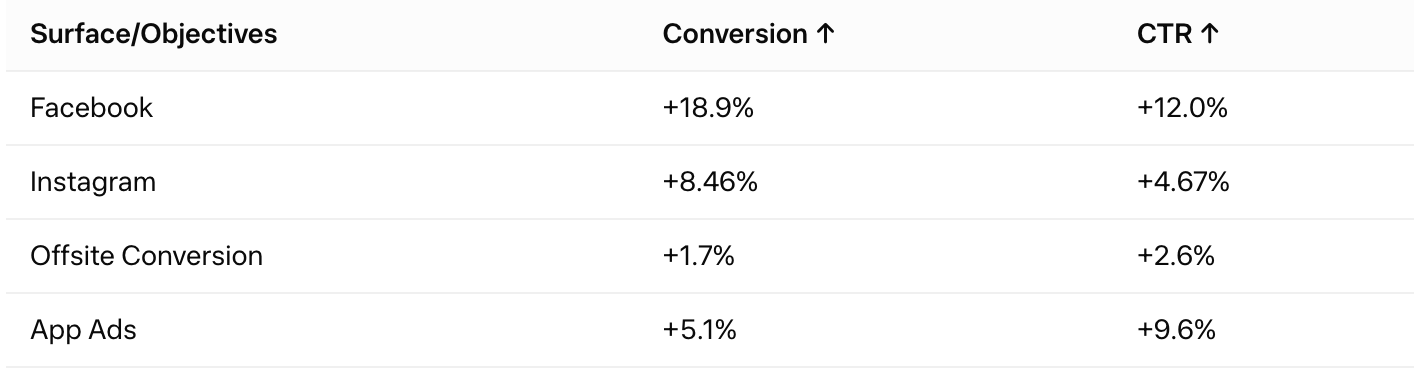
    Meta published engineering details on the 2026 generation of its Generative Ads Model (GEM), unifying previously separate per-surface ad-ranking systems (Facebook, Instagram, Reels) into one central foundation model trained with an LLM-style architecture called Kunlun. Meta reports 2.5x model complexity growth, 4x total training FLOPs, doubled training efficiency, and claims 18.9% conversion and 12% CTR improvements across its ad surfaces.

    No. 3 of 4Meta EngineeringTue 13 Oct
  4. Artificial intelligence

    When Messages Go Wrong: Understanding Communication Faults in LLM-Based Multi-Agent Systems

    Researchers ran a large-scale fault-injection study (29,000+ executions, 100 tasks) on LLM-based multi-agent systems and found that over a fifth of failures produce no immediate error signal, and that flat agent topologies retain far higher task success under communication faults (53%) than sequential or hierarchical ones (around 3%). The paper also evaluates recovery mechanisms and finds their effectiveness depends on whether an unaffected information path remains available to downstream agents.

    No. 4 of 4arXiv cs.CRSun 11 Oct